
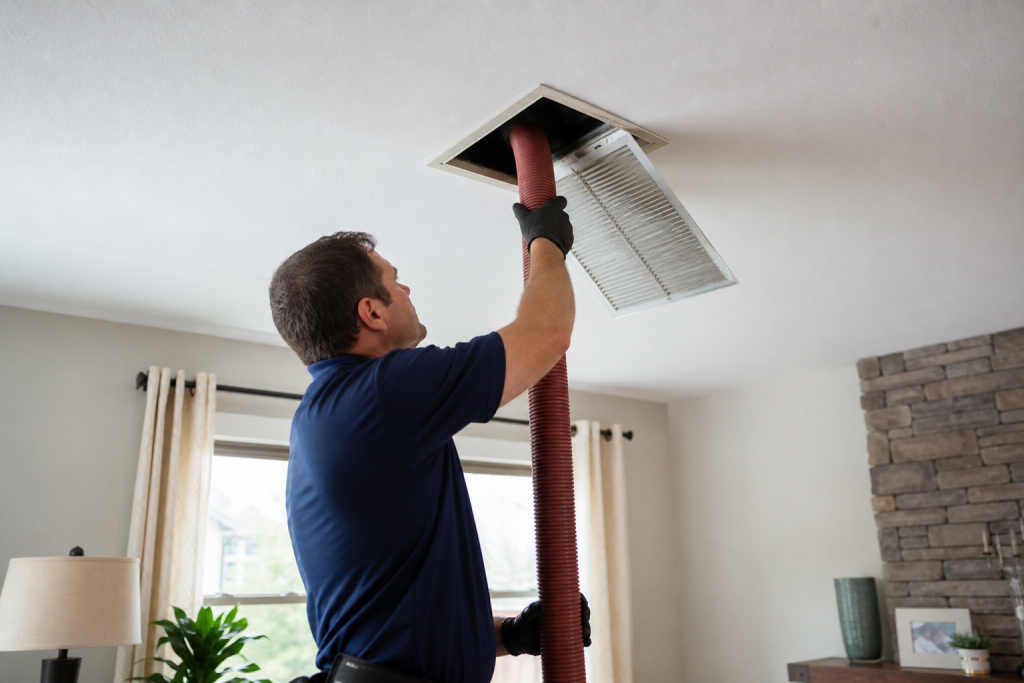
Emergency Air Duct Cleaning Near Me: What Cleveland Homeowners Should Do First
If your Cleveland home has suffered a flood, fire, or contamination event, emergency air duct cleaning typically costs $800–$2,500 depending on severity and square footage, and you should shut down your HVAC system immediately to prevent cross-contamination before calling any contractor. The first 24 hours are critical — but rushing to hire the first company that answers can cost you thousands in uncovered damages or incomplete remediation. If you’d rather have David Martinez walk through your system personally, call Liberty Bell Air Duct Cleaning Greater Cleveland home at (877) 516-9047 — we offer free estimates and same-day emergency response across Cuyahoga County.
In the 24 hours after a basement flood on the West Side or a house fire in Shaker Heights, your phone will ring from contractors you’ve never heard of, sometimes before you’ve even finished calling your insurance company — and those calls are not coincidental. We’ve been in this trade 17 years, and we’ve watched the same pattern repeat after every major storm or cold-snap pipe burst: predatory operators monitor public records and insurance claim databases, then swarm distressed homeowners with promises of same-day service and vague “emergency rates.” Here’s what we’ve learned actually protects you.
Shut It Down, Document Everything, Then Call Your Insurance
The sequence matters more than speed. In 2019, we were called to a home in Ohio City where the homeowner had run their furnace for three days after a sewage backup, trying to “dry things out.” The contaminated air had circulated through every room, turning a $1,200 duct cleaning into a $7,000 full-system replacement.
Here’s the order we recommend:
- Turn off your HVAC system at the breaker. Do not switch it to “fan only” or adjust the thermostat — any air movement spreads contaminants.
- Photograph everything before touching it. Water lines on ductwork, soot around registers, pest droppings, visible mold — your insurance adjuster needs timestamped evidence.
- Call your insurance carrier before hiring any contractor. Ask specifically: “Does my policy require pre-authorization for emergency remediation?” and “Do you have a preferred vendor list for air duct cleaning?” Some policies cover emergency services fully; others reimburse only approved providers.
- Get a claim number and ask for written confirmation of your coverage limits for HVAC remediation specifically — not just “water damage” broadly.
We’ve seen Cleveland homeowners void their coverage by signing contracts with “approved” restoration companies who then subcontract duct work to uncertified crews. If your insurance recommends a vendor, ask directly: “Who performs the actual duct cleaning, and what equipment do they use?”
How to Vet an Emergency Contractor in 10 Minutes
When your basement’s flooding or your kitchen’s full of smoke, you don’t have time for deep research. But four quick checks filter out most of the bad actors:
- Ask for their Ohio HVAC contractor license number and verify it on the Ohio Construction Industry Licensing Board website while they’re on the phone. Legitimate Cleveland contractors won’t hesitate.
- Request photos of their actual equipment. If they mention “industrial vacuums” but can’t name brands like Nikro or Abatement Technologies air scrubbers, they’re likely using shop-vacs with HEPA attachments — inadequate for post-disaster work.
- Check how long they’ve been at their current address. Storm-chasing operations rent temporary office space; established Cleveland companies have physical locations you can verify.
- Ask who performs the work. If the owner won’t be on-site, you’re getting whoever’s available that day — often an entry-level tech with minimal training.
At Liberty Bell, David Martinez personally leads every emergency job. After 17 years and 501 verified reviews, we’ve learned that the person assessing your damage should be the same person accountable for fixing it.
Real Emergency Equipment vs. Opportunistic “Emergency Service”
This distinction costs Cleveland homeowners thousands. Regular duct cleaning — the kind you schedule every 3–5 years — uses rotary brushes and negative-pressure vacuums to remove accumulated dust and debris. Post-disaster remediation requires an entirely different approach.
After a flood in Lakewood last spring, we encountered a competitor who had “cleaned” a homeowner’s ducts with a standard Rotobrush system. The equipment was professional-grade, but completely wrong for the job: the brushes had spread moisture and mold spores throughout the trunk line, and the homeowner’s allergy symptoms worsened for weeks.
True emergency remediation requires:
- Abatement Technologies HEPA air scrubbers with activated carbon filtration for smoke and chemical removal
- Moisture meters and thermal imaging to locate hidden water in duct cavities
- Antimicrobial application equipment, not just vacuum systems
- Containment barriers to isolate affected zones from clean areas of your home
Ask any contractor: “What percentage of your annual jobs are post-disaster remediation versus routine maintenance?” If it’s under 20%, they’re learning on your system.
What Your Cleveland Insurance Policy Actually Covers
Standard homeowners policies in Cuyahoga County vary significantly in HVAC remediation coverage. We’ve worked directly with adjusters from major carriers after events in Cleveland Heights, Parma, and Downtown, and the patterns are consistent:
- Sudden water damage (burst pipes, appliance failures): Typically covered, including duct cleaning if performed by a licensed contractor within 72 hours
- Flood damage from external sources: Requires separate flood insurance; standard policies exclude it entirely
- Fire and smoke damage: Usually covered, but insurers increasingly require documentation that soot infiltration reached the duct system — not just surface cleaning
- Pest contamination: Often excluded or capped at low limits unless vermin caused structural damage
Critical detail: Many policies require “reasonable mitigation” — meaning you must take steps to prevent further damage. Shutting down your HVAC qualifies. Waiting a week to call a contractor does not. Keep all receipts for emergency services; even if your initial claim is denied, documentation supports appeals.
We’ve assisted Cleveland homeowners with insurance documentation using photos from our Honeywell-calibrated inspection cameras, showing adjusters exactly what contaminants were present and where. Visual proof speeds approvals.
Cleveland’s Most Common Emergency Scenarios — and What Each Actually Needs
Cleveland’s lake-effect weather, aging housing stock, and seasonal temperature swings create distinct emergency patterns. Here’s what we’ve encountered across 17 years:
Post-flood (basement/lower level): After spring storms or winter pipe bursts in neighborhoods like Tremont or Detroit-Shoreway, fiberglass duct board absorbs water and won’t dry properly inside walls. We typically recommend full replacement of affected sections, not just cleaning. Metal ductwork can sometimes be salvaged with thorough drying and antimicrobial treatment.
Post-fire (kitchen/grease or electrical): Soot particles are acidic and corrosive. In a 2022 job on the East Side, we found that a generalist contractor had wiped down registers but never accessed the main trunk line — the homeowner’s Aprilaire air cleaner clogged within a month from residual particulate. Fire jobs require complete system inspection, not spot treatment.
Post-pest (rodents, bats, insects): We get these calls every autumn when Cleveland’s older homes develop entry points. Beyond cleaning, we seal accessible entry points and recommend Guardsman-grade protective coatings on vulnerable duct surfaces. The health risk isn’t just droppings — it’s the parasites and bacteria they carry.
Post-renovation emergency: Less dramatic but increasingly common. Contractors in Ohio City and Gordon Square’s renovation boom sometimes cut corners on containment. We’ve pulled construction debris from ducts that “looked fine” — including drywall screws that could have damaged blower motors.
When to Call a Professional Immediately
Some situations genuinely can’t wait for research. Call a qualified technician now if you smell burning from your vents, see visible mold spreading across multiple registers, or your carbon monoxide detector activates alongside HVAC operation. These indicate active hazards, not just contamination.
For related concerns in Cleveland’s western suburbs, our Air Duct Cleaning in Lakewood and HVAC Cleaning in Lakewood pages detail our full inspection and cleaning process. If your emergency involves a clothes dryer vent fire risk, see our Dryer Vent Cleaning in Lakewood service.
The Bottom Line
Emergency air duct cleaning in Cleveland demands speed, but not haste. Shut down your system first, document everything for insurance, verify your contractor’s actual equipment and experience with post-disaster work, and never let anyone pressure you into signing before you’ve confirmed coverage. The contractors who call you first are rarely the ones you want.
At Liberty Bell Air Duct Cleaning Greater Cleveland, we’ve handled emergency remediation across every Cleveland neighborhood from Bratenahl to Brooklyn. David Martinez personally assesses every emergency call, and we carry the professional-grade equipment — Nikro and Abatement Technologies systems — that post-disaster situations actually require. If you’re facing an air duct emergency anywhere in Cuyahoga County, call (877) 516-9047 for a free estimate and same-day response.
Frequently Asked Questions
Emergency air duct cleaning in Cleveland typically ranges from $800 for localized contamination in a small home to $2,500 for whole-system remediation after fire or flood damage. Factors include square footage, duct material (fiberglass costs more to replace than metal), and whether HVAC components like coils and blowers also require cleaning. Call (877) 516-9047 for an exact quote — estimates are free.
No — and attempting it can make contamination worse and void your insurance coverage. Post-disaster duct systems contain biohazards, moisture in hidden cavities, and particulate that requires HEPA containment and professional-grade extraction equipment. We’ve been called to correct DIY attempts in Cleveland homes where homeowners spread mold throughout their system with household vacuums. This is one situation where professional remediation isn’t optional.
Reputable Cleveland contractors typically offer same-day response for true emergencies, often within 2–4 hours during business hours. Be wary of anyone promising instant arrival — legitimate companies have dispatch procedures, insurance verification, and equipment loading that take preparation time. At Liberty Bell, we prioritize emergency calls across Cleveland and surrounding communities with our full remediation setup, not just a vacuum truck.
Most standard policies cover sudden, accidental damage like burst pipes or fire, but exclude gradual issues or flooding from external sources without separate flood coverage. The key is documentation and proper sequencing: shut down your HVAC, photograph everything, notify your carrier before hiring, and use a licensed contractor. We’ve assisted Cleveland homeowners with insurance documentation using our inspection camera footage to demonstrate contamination scope — call (877) 516-9047 and we’ll walk you through the process.
Written by David Martinez, Owner & Lead Technician at Liberty Bell Air Duct Cleaning Greater Cleveland, serving Cleveland since 2009.
Need Air Duct Cleaning Help?
Call Liberty Bell Air Duct Cleaning Greater Cleveland — licensed & insured, available 24/7 in Cleveland.
(877) 516-9047